Madrid’s Modular Metro
How to build a subway at half the cost and twice the speed, something most would say is impossible. But Madrid did it. Here’s how.

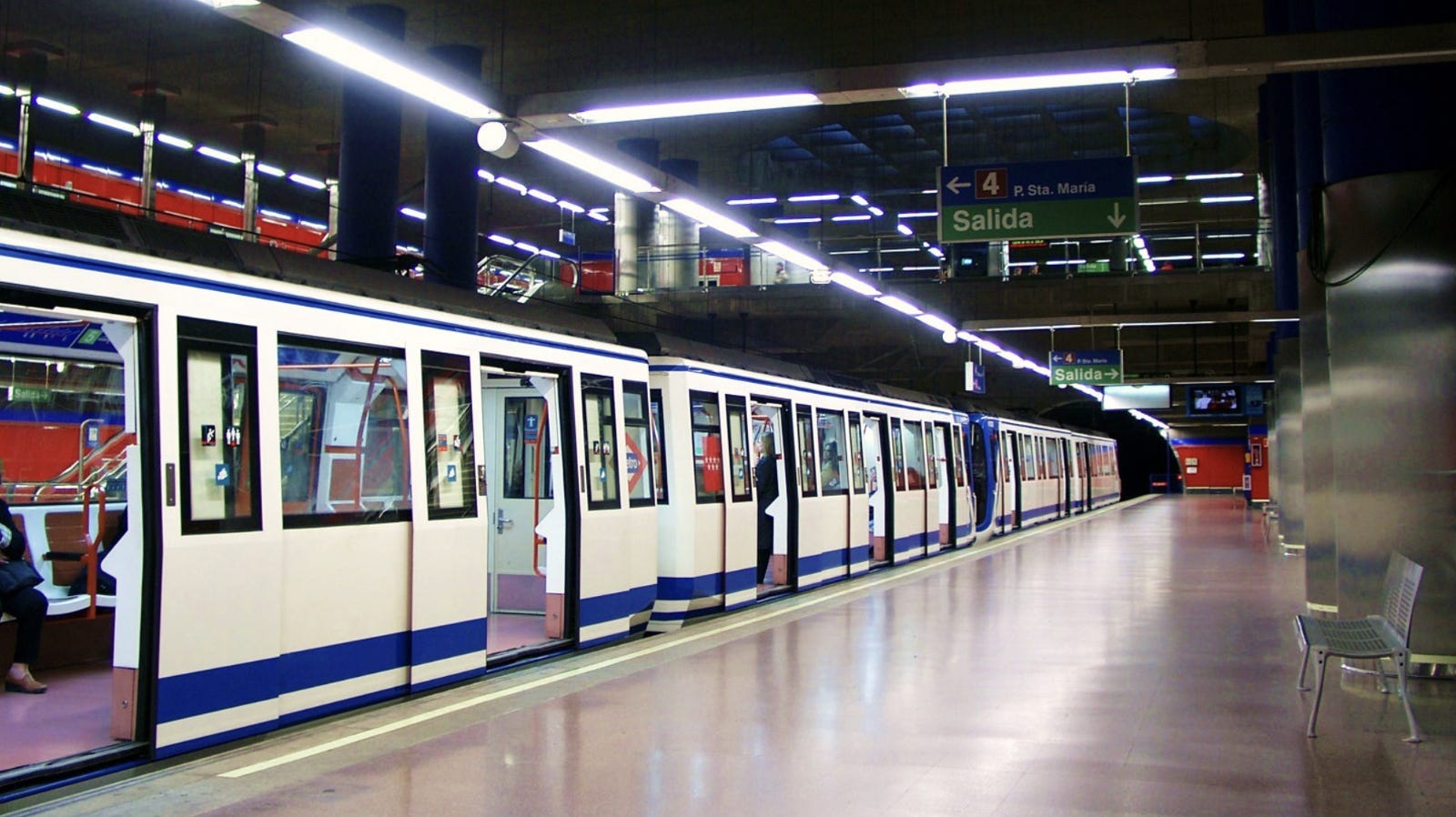

The leadership of Madrid Metro was responsible for one of the largest and fastest subway expansions in history. They succeeded because they understood the importance of speed and modularity, two concepts not normally associated with subway construction.
Subway construction is generally seen as bespoke and slow by nature. It can easily take 10 years from the decision to invest in a new line until trains start running, as was the case with Copenhagen’s recent City Circle Line. And that’s if you don’t encounter problems, in which case you’re looking at 15 to 20 years, as happened with London’s Victoria line.
The Madrid Metro leadership figured there had to be a better way, and they found it.
Begun in 1995, the Madrid subway extension was completed in two stages of just four years each (1995 to 1999: 56 kilometers of rail, 37 stations; 1999 to 2003: 75 kilometers, 39 stations), thanks to a radically innovative approach to tunneling and station building.
The success was the result of applying three basic rules to the design and management of the project.
Rule №1: No Monuments
The Madrid Metro leadership decided that no signature architecture would be used in the stations, although such embellishment is common, sometimes with each station built as a separate monument. (Think Stockholm, Moscow, Naples, London’s Jubilee line, and New York’s Second Avenue Subway.) Signature architecture is notorious for delays and cost overruns, the Madrid leaders knew, so why invite trouble?
Their stations would each follow the same modular design and use proven cut-and-cover construction methods, allowing replication and learning from station to station as the metro expanded.
Rule №2: No New Technology
The project would eschew new construction techniques, designs, and train cars. Again, this mindset goes against the grain of most subway planners, who often pride themselves on delivering the latest in signaling systems, driverless trains, and so on.
The Madrid Metro leadership was keenly aware that new product development is one of the riskiest things any organization can take on, including their own. They wanted none of it. They cared only for what worked and could be done fast, cheaply, safely, and at a high level of quality. They took existing, tried-and-tested products and processes and combined them in new ways.
Does that sound familiar? It should. It’s the way Apple innovates, with huge success.
Rule №3: Speed
The Madrid Metro leadership understood that time is like a window. The bigger it is, the more bad stuff can fly through it, including unpredictable catastrophic events, or so-called black swans.
They thought long and hard about how to make their window radically smaller by organizing tunneling work for speed.
Traditionally, cities building a metro would bring in one or two tunnel-boring machines to do the job. The Madrid leaders instead calculated the optimal length of tunnel that one boring machine and team could deliver — typically three to six kilometers in 200 to 400 days — divided the total length of tunnel they needed by that amount, and then hired the number of machines and teams required to meet the schedule.
At times, they employed up to six machines at once, completely unheard of when they first did it. Their module unit was the optimal length of tunnel for one boring machine, and like the station modules, the tunnel modules were replicated over and over, facilitating positive learning.
As an unforeseen benefit, the tunnel-boring teams began to compete with one another, accelerating the pace further. They’d meet in Madrid’s tapas bars at night and compare notes on daily progress, making sure their team was ahead, transferring learning in the process. And by having many machines and teams operating at the same time, the Madrid Metro leadership could also systematically study which performed best and hire them the next time around. More positive learning.
A feedback system was set up to avoid time-consuming disputes with community groups. The Madrid Metro leadership also persuaded them to accept tunneling 24/7, instead of the usual daytime and weekday working hours, by asking openly if they preferred a three-year or an eight-year tunnel-construction period.
No monuments, no innovation, modular, and fast. Sounds like a recipe for boring, low-quality design, right?
But go to Madrid and you will find large, functional, airy stations and trains — nothing like the dark, cramped catacombs of London and New York. Madrid’s metro is a workhorse, with no fancy technology to disrupt operations. It transports millions of passengers, day in and day out, year after year, exactly as it is supposed to do.
Madrid achieved this at half the cost and twice the speed of industry averages — something most thought impossible.
Next time your city contemplates building a new subway line, show them this article and tell them to get in touch. I will connect them with the right people, so that you, too, can get metro twice as fast at half the cost.
………………..
NOTE: For a fuller explanation of the importance of modularity and speed to the success of any project, see: Flyvbjerg, Bent, 2021, “Make Megaprojects More Modular,” Harvard Business Review, November-December, pp. 58–63. Free copy here.